
In a world filled with constant notifications, busy schedules, and endless visual stimulation, many people are seeking something surprisingly simple: a sense of calm.
Interior design trends over the past decade have shifted away from clutter and excess toward intentional living, natural materials, and spaces that support wellbeing. Yet one element is often overlooked when creating a peaceful home—the artwork on the walls.
Nature photography, particularly imagery that embraces stillness, open space, and soft natural light, has the unique ability to influence how a room feels. More than decoration, it can shape atmosphere, evoke emotion, and create moments of visual rest within our daily lives.
Why We Crave Calm Interiors
Modern life exposes us to more visual information than ever before. Our homes have become more than places to sleep; they have become offices, creative spaces, sanctuaries, and gathering places.
As a result, people are increasingly drawn to interiors that feel:
- Calm rather than chaotic
- Spacious rather than crowded
- Natural rather than artificial
- Timeless rather than trend-driven
This shift explains the growing popularity of design styles such as Scandinavian, Japandi, Organic Modern, and Coastal Minimalism. While these styles differ in appearance, they share a common goal: creating environments that support a slower, more intentional way of living.
Art plays a significant role in achieving this feeling.
The Emotional Power of Nature Photography
Unlike abstract art or bold graphic prints, nature photography often connects us to something familiar and deeply human.
Research has consistently shown that exposure to natural environments can help reduce stress and improve overall wellbeing. While a photograph is not a substitute for being outdoors, it can still evoke many of the same emotional responses.
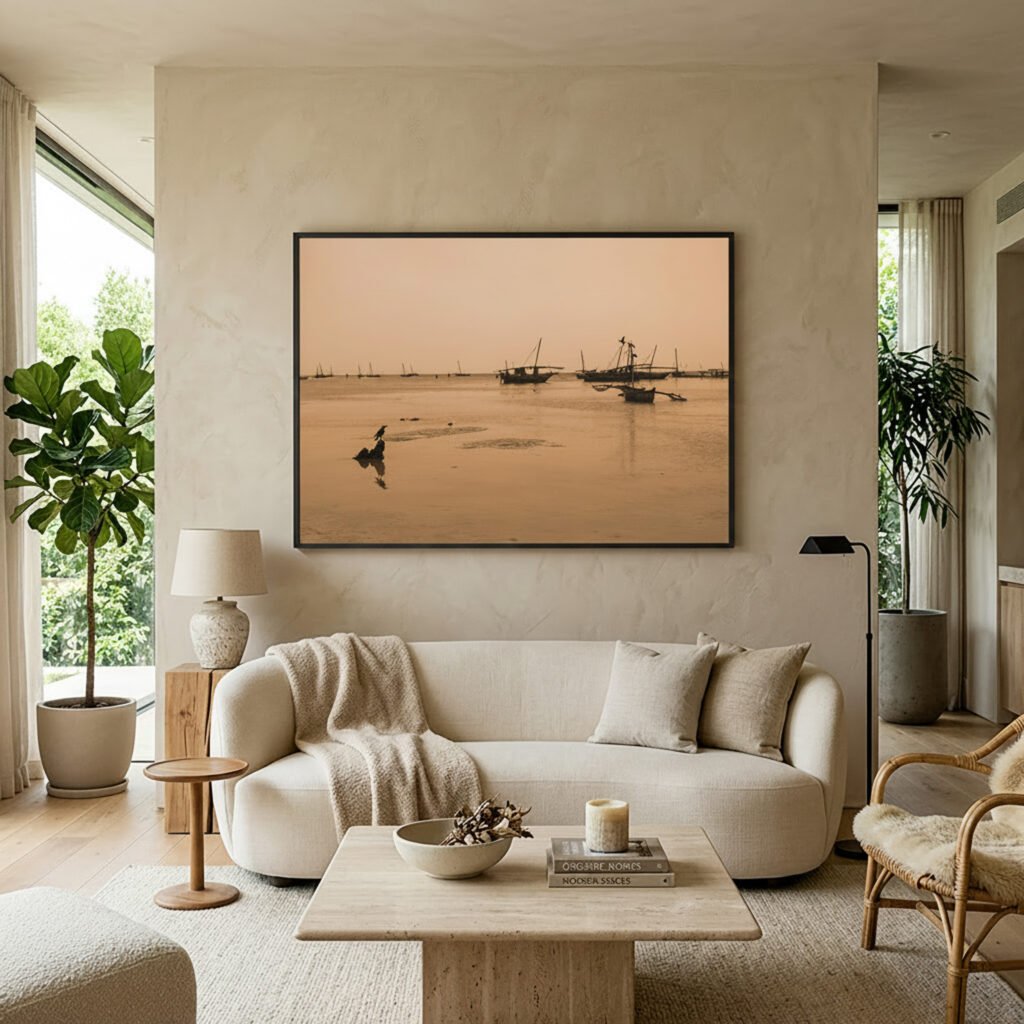
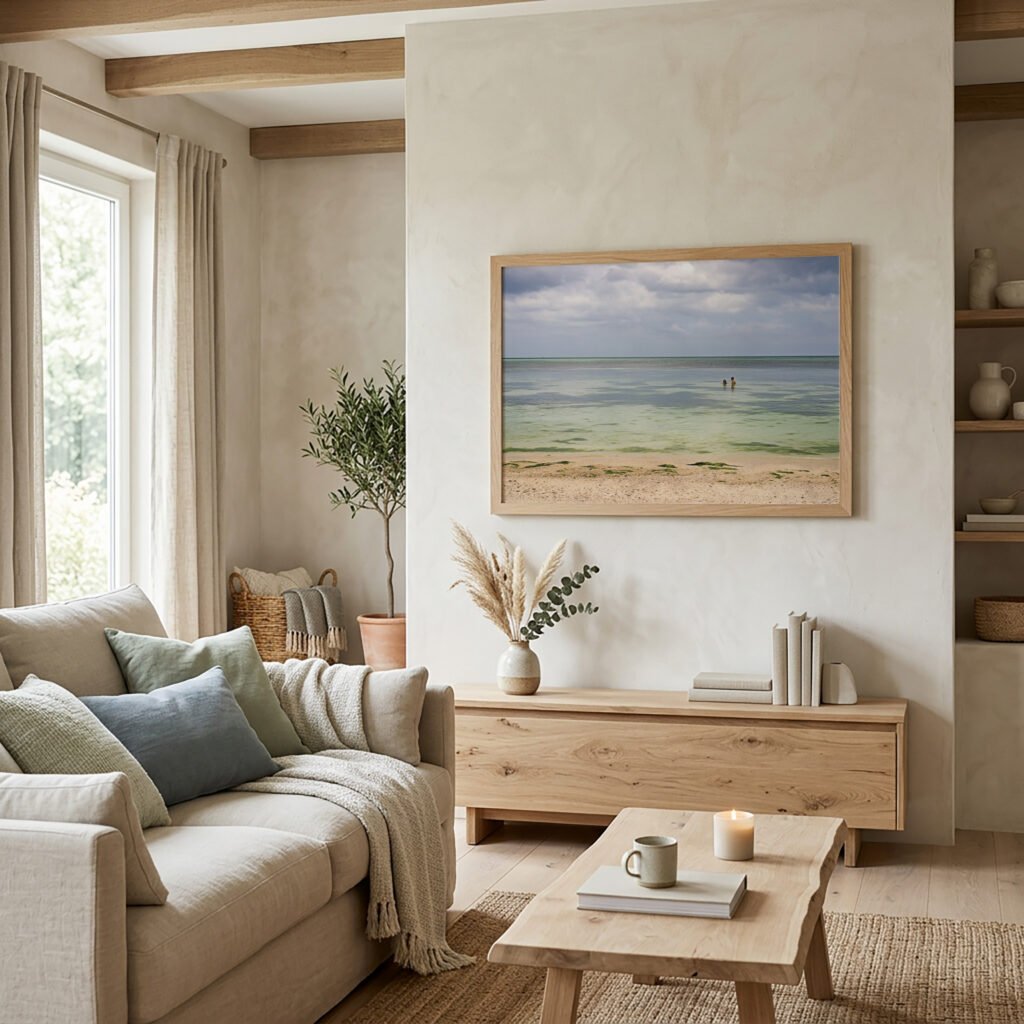
A photograph of a quiet shoreline, a solitary boat resting on calm water, or a distant horizon stretching beneath soft light can instantly create a sense of openness within a room.
These images remind us to pause.
They invite us to look a little longer.
They create space—not physically, but emotionally.
The Role of Stillness in Visual Design
Not all nature photography creates the same effect.
Images filled with dramatic action, vibrant colors, and high contrast often energize a space. They capture attention immediately and become focal points within a room.
Images centered around stillness work differently.
Characteristics of calming photography often include:
- Open compositions
- Gentle color palettes
- Soft natural light
- Minimal visual distractions
- Quiet moments rather than dramatic events
These elements allow the eye to rest.
Instead of demanding attention, they create a subtle presence that gradually influences the atmosphere of a room.
This is one reason why minimalist landscape photography continues to resonate with homeowners, interior designers, and hospitality spaces around the world.
How Photography Influences the Feeling of a Room
When choosing wall art, many people focus primarily on matching colors.
While color coordination matters, the emotional tone of an image is often even more important.
Consider the difference between:
- A crowded city street filled with movement
- A calm shoreline at sunrise
- A wildlife photograph capturing a moment of still observation
- A quiet desert landscape beneath soft light
Each image creates a different emotional response.
The most successful interiors often combine visual harmony with emotional consistency. If the goal is to create a peaceful environment, the artwork should support that intention.
Nature photography can contribute by introducing:
A Sense of Space
Wide horizons and open landscapes make rooms feel larger and more breathable.
Connection to Nature
Natural imagery helps bring elements of the outdoors inside, especially in urban environments.
Visual Balance
Photography with simple compositions can help balance furniture, textures, and architectural elements.
Emotional Comfort
Images associated with quiet moments often create feelings of safety, reflection, and calm.
Choosing Photography for Different Spaces
Different rooms benefit from different types of imagery.
Living Room
The living room is often the heart of the home and benefits from artwork that creates a welcoming atmosphere.
Consider:
- Coastal scenes
- Open landscapes
- Soft horizon lines
- Minimalist seascapes
These images help establish a relaxed and inviting environment.
Bedroom
Bedrooms should encourage rest and restoration.
Ideal subjects include:
- Calm water
- Gentle skies
- Soft neutral tones
- Minimal compositions
Photography with a quiet mood can support a more restful atmosphere.
Home Office
Working from home has become increasingly common, making visual balance more important than ever.
Photography featuring open space and natural landscapes can provide moments of visual relief throughout the day.
Entryway
The entryway creates the first impression of a home.
A carefully chosen nature photograph can immediately communicate a sense of warmth, calm, and intention.
Why Timeless Artwork Matters
Design trends come and go.
Colors change.
Furniture styles evolve.
Decorative accessories are replaced.
The most enduring artwork, however, often shares several qualities:
- Simplicity
- Authenticity
- Emotional resonance
- Connection to nature
Rather than following short-lived trends, nature photography offers something more lasting.
It remains relevant because it reflects experiences that are universally meaningful: light, space, movement, stillness, and our relationship with the natural world.
Creating a Home That Feels Like a Retreat
The goal of a peaceful home is not perfection.
It is not about creating a showroom or following every design trend.
Instead, it is about creating an environment that supports how you want to feel.
The artwork you choose becomes part of that experience.
A quiet shoreline may remind you to slow down.
A distant horizon may encourage reflection.
A solitary boat resting on calm water may bring a sense of balance at the end of a busy day.
These small moments matter.
They shape how we experience the spaces we inhabit.
Final Thoughts
Nature photography is more than wall decor.
At its best, it becomes a subtle but powerful part of daily life—bringing light, openness, and a sense of calm into the places where we spend the most time.
In a fast-moving world, images that celebrate stillness offer something increasingly valuable: a reminder that beauty often exists in the quiet moments.
And sometimes, that quiet is exactly what a home needs.